The art of traveling well
Travel Pillow Materials: Comfort and Care on Long Journeys
A travel pillow may be small, but its materials shape the experience of every stop between departure and arrival. The cover meets your skin; the filling determines how the pillow yields or holds its form; and the construction decides whether it is easy to carry, adjust and refresh. Understanding these details makes it easier to choose portable sleep comfort that suits the way you travel.
From a smooth silk shell to a supportive memory foam core, travel pillows are built from combinations rather than a single universal recipe. There is no material that is best for every journey. A compact pillow for a train seat has different demands from a neck pillow used on an overnight flight, and a soft touch is only one part of the equation. Shape, fit, warmth, cleanability and the space available in your bag all matter.
Start with the pillow’s two material stories
When comparing travel pillows, separate the cover from the filling. These layers do different jobs and may call for different care. The cover is the surface you feel against your cheek or neck. Its texture, breathability and ability to come off for washing can make a noticeable difference during repeated use. The filling is responsible for most of the pillow’s shape and support, and may be difficult or impossible to wash at home.
A description that says “silk travel pillow,” for example, may refer to a silk outer shell, a silk-containing fill, or a combination of materials. Some pillows have a silk cover over memory foam. Others use a silk exterior with an internal casing and mixed filling. Reading the construction details is more useful than relying on a single material name.
- Cover: the fabric that touches the skin, such as silk, cotton sateen or another textile.
- Inner casing: a layer that contains the filling and may help the pillow keep its shape.
- Filling: the cushioning material, which may include memory foam, silk fiber, polyester or a blend.
- Closure: a zip, clip or sewn edge that affects fit, removal and cleaning.
It is worth checking these components individually. A removable cover does not necessarily mean the entire pillow can be machine washed, while a washable shell does not guarantee that the insert can be immersed. Knowing which layer is intended to be cleaned can prevent avoidable wear.
The cover: softness, breathability and feel
Because a travel pillow is often held close to the face, the cover’s hand—the way a fabric feels to the touch—can be as important as the pillow’s appearance. Smooth fabrics tend to glide against skin and hair, while more textured weaves may feel familiar, substantial or less slippery. Personal preference matters: a surface that feels cool and fluid to one traveler may seem too slick to another.
Silk is valued for its smooth, fine surface and natural sheen. A silk cover can offer a gentle feel against the skin, particularly when the pillow is used for resting against a window or headrest. It is not a substitute for the support of the filling, however, and the quality of the overall experience still depends on the pillow’s shape and fit. Silk also benefits from considerate handling, especially when exposed to friction, spills or rough hardware in a packed bag.
Cotton covers are familiar and available in a wide range of weaves. A cotton sateen cover, for instance, has a smooth finish created by its weave, while other cotton fabrics may feel crisper or more textured. Synthetic fabrics can be selected for resilience or easy-care properties, but their feel and airflow vary by construction. Labels and product descriptions should identify the actual material rather than relying on broad terms such as “soft” or “cool.”
For silk, terms such as momme describe fabric weight rather than the number of individual threads. A higher momme figure generally indicates more silk by area, but it does not tell you everything about the fabric’s finish, weave or durability. If the description provides a weight, fiber composition and care directions, those details together offer a more useful picture than a luxury adjective alone.
The filling: support without unnecessary bulk
The pillow’s fill determines whether it compresses easily, springs back, contours around the neck or stays relatively flat. These traits are especially important in transit, where a pillow may be used upright in a seat rather than on a mattress. Think about what you want it to do: cradle the side of the neck, soften pressure against a window, or provide a small cushion for a short rest.
Memory foam is often used in contoured neck pillows because it can hold a shaped profile and respond to pressure. A foam core may feel more structured than loose fiber filling, though the sensation varies with its density, cut and cover. A removable cover is useful because it separates routine surface cleaning from the more delicate care of the foam core. Foam should be handled according to its care label; soaking or machine washing an insert that is not designed for it can damage its structure.
Loose or layered fiber fills can create a softer, more compressible pillow. A travel pillow may combine natural fibers with a polyester core to balance softness and loft retention. In such a construction, the outer material and inner casing should not be confused with the fill itself. A cushion can have a silk shell or silk-containing fill while also using cotton for an inner casing.
Compression and recovery are practical considerations. A pillow that feels plush at home may take up valuable luggage space, while one that packs down very small may provide less consistent support. If the product information gives dimensions, weight or a packing method, use those details to judge portability. The ideal balance depends on the length of the trip, your preferred support and whether you will carry the pillow by hand or attach it to a bag.
Shape and closure are part of the material experience
Material alone cannot make a travel pillow comfortable if the shape does not suit the way you rest. A contoured neck pillow is designed to wrap around the neck and offer support in an upright position. A small rectangular travel pillow is more adaptable: it can be placed behind the head, between the body and a seat, or used as a compact cushion. Consider the surfaces and seating positions you encounter most often.
Closures influence both fit and upkeep. A clip can help keep a neck pillow around the shoulders or attach it to a bag, though it should be positioned so that it does not press uncomfortably against the skin. A zipper can make a cover removable, but the zipper should be closed before laundering to reduce snags. An envelope-style opening, more common on bedding pillowcases, keeps an insert contained without a prominent fastening; on a travel accessory, construction details will vary.
Look closely at whether “removable” means the full cover comes off or only a small panel opens. Check whether the care directions apply to the cover, the insert or the whole pillow. If the wording is unclear, it is safer to follow the most restrictive instruction rather than assume that every layer is washable.
A practical way to compare travel pillow materials
Before choosing, compare construction against the conditions in which you will use the pillow. The following questions bring the most relevant details into focus:
- Where will you use it? A neck pillow for upright seating has different shape requirements from a small pillow for a train table or window seat.
- What kind of support feels comfortable? A shaped foam core may feel more structured; a mixed or fiber fill may feel softer and more compressible.
- Which layer touches your skin? Confirm whether the silk or other named fabric is the outer cover, an internal layer or part of the filling.
- Can the cover be removed? Removable covers can make routine refreshing more convenient, but check the wash instructions before assuming they are machine-safe.
- How much space can it take up? Compare its dimensions with your carry-on or day bag, and consider whether it compresses or clips on.
- What care can you realistically manage? Delicate washing and air drying may suit some travelers; others may prefer a construction with simpler maintenance.
These questions help distinguish a pillow that is merely attractive from one that will fit into a real travel routine. They also make comparisons more precise. Instead of asking whether silk or foam is “better,” ask whether the combination of shell, fill, shape and care requirements meets your needs.
Care on the road: small habits, lasting freshness
Travel exposes pillows to more than ordinary bedroom use. They may rest against transport upholstery, be tucked into overhead storage or spend hours inside a packed bag. A few simple habits can help keep them fresh without subjecting delicate materials to unnecessary washing.
- Use a clean storage pouch. Keep the pillow separate from shoes, toiletries and damp clothing. A breathable bag can help prevent it from being trapped against moisture.
- Air it out after use. Once you arrive, remove the pillow from its case or luggage and let it air in a clean, dry place, following the maker’s guidance.
- Attend to marks promptly. Blot a fresh spill gently with a clean cloth instead of rubbing it into the fibers. Check the care label before applying stain removers or detergent.
- Keep the cover clean and dry. If a cover is removable, wash it only as directed and allow it to dry fully before putting it back on the insert.
- Protect delicate surfaces. Avoid storing silk against rough fasteners, jewelry or abrasive items that could catch the fabric.
Travel pillow care is not one-size-fits-all. A removable silk cover may be suitable for a delicate machine cycle at a low temperature, while another silk item may require hand washing or professional care. Memory foam cores often have stricter limitations than their covers. The care label for the exact pillow takes precedence over general advice, including guidance offered for a different silk product.
Washing a silk travel pillow cover
If the manufacturer confirms that a silk cover can be machine washed, use the specified delicate setting and a mild detergent intended for delicate fabrics. Turning the cover inside out and fastening any zipper can help protect its surface. Avoid bleach, high temperatures and vigorous agitation unless the care instructions explicitly allow them. When hand washing is recommended, use cool water and gentle movements rather than wringing or twisting the fabric.
Air drying is typically gentler than high heat. Shape the cover carefully and dry it away from intense direct heat, then use a cool iron only if the care label permits it. Silk can be weakened by harsh chemicals and rough handling, so a conservative approach is sensible. Do not wash the foam or internal filling simply because the outer shell is washable; follow separate directions for each component.
For a non-removable cover or a pillow with a care label that advises against washing, spot cleaning may be the appropriate option. Test any cleaning method in an inconspicuous area if the instructions allow testing, and avoid saturating the filling. When in doubt, consult the manufacturer’s care guidance rather than experimenting with a delicate or structured pillow.
Travel pillow examples: contrasting constructions
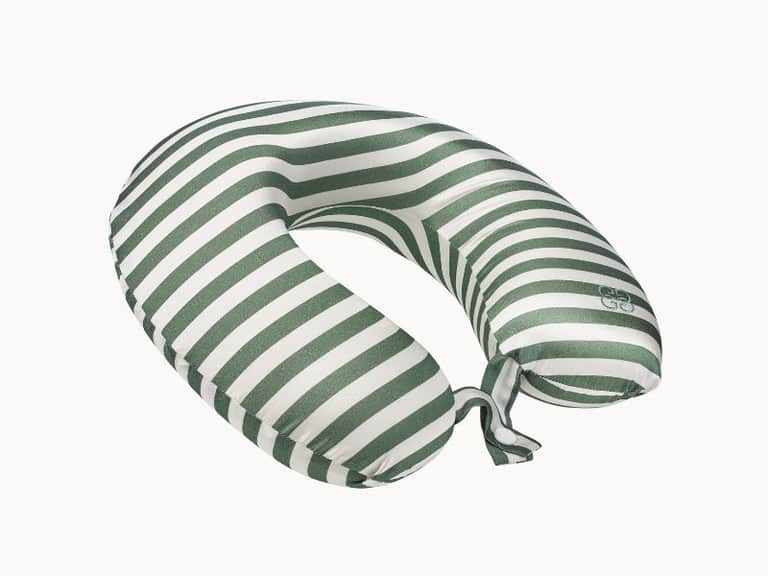
Specific construction details show why the category is broader than the phrase “silk pillow” suggests. The New Silk Travel Neck Pillow – Green & Ivory Stripe pairs a 100% mulberry silk shell with a memory foam cushion. Its contoured shape, clip closure and removable cover are features to consider for upright travel and regular refreshing. The care directions specify a delicate cycle at no more than 30°C, mild detergent, air drying and a cool iron; the cover and foam should still be treated according to their respective instructions.
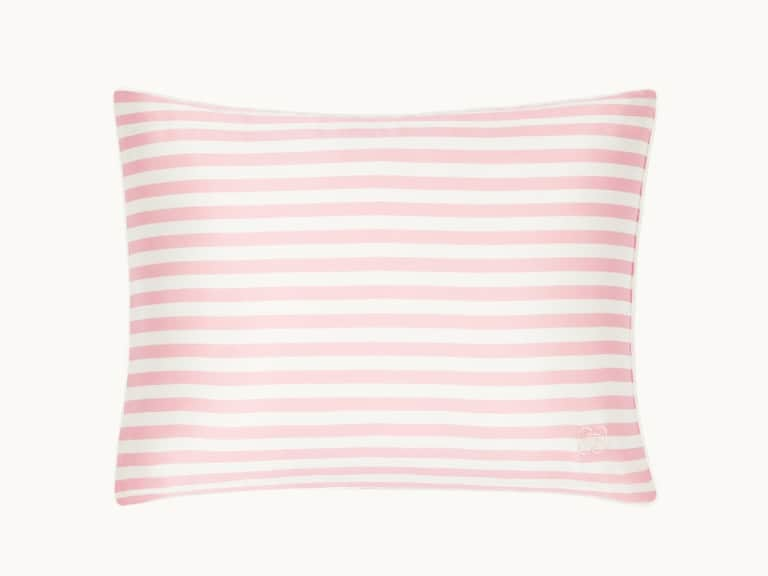
A different construction appears in the Silk Travel Pillow – Pink & Ivory Stripe. Its description identifies a 19 momme mulberry silk exterior, a filling of long-strand mulberry silk wrapped around a polyester core, and a cotton sateen inner casing. This example illustrates why it is useful to look beyond the word “silk”: the pillow combines several materials, each with a different role in its feel and structure. The product details should be consulted for the care of the complete pillow and its individual layers.
These constructions serve different preferences. A contoured neck pillow is shaped for a more specific position, while a compact cushion can be repositioned in several ways. Neither format is universally superior. The right choice depends on how you sit, where you plan to rest and whether the care routine fits your habits.
Common assumptions worth reconsidering
“Silk means the whole pillow is silk.” Not necessarily. A silk outer cover may enclose foam, a blend or another filling. Read the material list for each layer.
“A removable cover means the pillow is machine washable.” It usually means the cover can be separated, not that the insert can go into the washing machine. Follow care instructions for both parts.
“The softest surface will provide the most support.” Surface feel and support come from different elements. The cover affects touch; the shape and fill do more of the work of holding the head or neck.
“Portable always means compact enough for any bag.” A pillow may be designed for travel yet still occupy significant space. Check measurements and consider how you will carry it during transfers.
“A premium fabric needs constant washing.” Frequent washing can add wear, particularly to delicate textiles. Airing out a pillow, using a clean storage pouch and washing removable components only when needed can be more appropriate, provided the care label supports those practices.
A considered choice for the journey ahead
The best travel pillow is not simply the one with the most luxurious-sounding material. It is the one whose cover feels pleasant, whose filling and shape suit your preferred resting position, and whose size and care requirements make sense for the way you move. A smooth natural-fiber cover can bring a gentle, refined touch to a travel accessory; a structured core can provide a different kind of support; and a removable cover can make upkeep more manageable when it is designed for washing.
Before packing, check the material composition, confirm which parts can be cleaned, and let the pillow dry completely after care. Those details may seem modest, but they help preserve the feel of the fabric and the usefulness of the form. On a long journey, comfort is rarely one grand gesture. More often, it is the sum of small, well-considered choices.
Travel pillow materials at a glance
| Component | What it affects | What to check |
|---|---|---|
| Cover fabric | Touch, surface feel and routine cleaning | Fiber content, removability and wash directions |
| Filling | Shape, firmness, compression and support | Material, care limits and recovery after use |
| Inner casing | Containment and construction of the fill | Whether it is separate from the outer cover |
| Shape and closure | Positioning, fit and ease of carrying | Dimensions, clip or zipper design, and intended use |